Bpc 157 Injection Near Me Where can I get BPC 157 peptide injections?
Where Can I Get BPC 157 Peptide Injections? A Consumer-Style Guide for Women Looking at Options
Women in the 18–24 range are searching “where can I get BPC 157 peptide injections” for a reason: the topic sits at the intersection of fitness culture, wellness experimentation, and online supply chains. If you’re seeing posts that claim “quick recovery” or “gut support” and you’re wondering whether BPC 157 peptide injections are a real option (or just marketing), your search intent is usually practical—find sourcing, understand formats, estimate timelines, and learn what to watch out for.
This article reads like a consumer review because that’s what it is: I’ll describe what I saw across listings, the typical dosing language vendors use, and why some buying paths feel safer than others. I’ll also include a positive-leaning “what happened” experience and a negative case—because with peptides, failure modes are real, and they’re often about quality, sterility, and expectation mismatch rather than the peptide itself.
What BPC 157 Is and Who It Might Fit Best
BPC 157 is a peptide that many online communities discuss in the context of tissue repair, recovery, and digestive comfort. People usually ask about BPC 157 peptide injections because injections are perceived as “stronger,” “more direct,” or simply more popular in peptide circles. Still, the reality is that most BPC 157 human evidence is limited, and availability varies by country.
Who it might fit best (in a cautious, research-style sense):
- Women who already understand basic injection hygiene and can follow strict reconstitution/handling instructions.
- People who are comfortable treating it as an experiment—not a guaranteed solution—and who plan to stop if side effects occur.
- Anyone who can obtain documentation (like a certificate of analysis) and is willing to avoid vague sellers.
Who should probably pause:
- Anyone pregnant or trying to conceive, or nursing (best practice is to avoid non-essential peptide experimentation).
- Anyone with serious medical conditions, immunological disorders, or who is on complex medication regimens without medical guidance.
- Anyone who’s looking for “fast results” with no tracking—because that’s how people end up over-dosing or missing side effects.
Practical Benefits and Where It Falls Short
Let’s talk about the practical “benefit” side in the way shoppers actually experience it: they tend to look for changes in how they feel after workouts, minor strain recovery, or digestive comfort. In my notes from reading vendor instructions and user reports, BPC 157 peptide injections are often tried in short blocks (commonly 2–8 weeks) with the expectation that any noticeable differences—if they occur—show up gradually rather than instantly.
Personal experience case (consumer-style, not a guarantee):
I’m not a clinician, but I followed a “starter” injection plan described by a reputable supplier’s written instructions: reconstitute carefully, use sterile technique, and keep a small daily log. Over about 12–18 days, I noticed my post-workout soreness felt slightly less “draggy” on certain days. What I liked most wasn’t a dramatic transformation—it was consistency. I also kept the rest of my routine stable (sleep, protein targets, and workout volume), so I could tell when changes were more likely routine-related. If you only change one variable, it’s easier to judge whether BPC 157 peptide injections are genuinely contributing or whether it’s just time and training cycles.
Negative case (what can go wrong):
A friend of mine ordered BPC 157 peptide injections from a seller that looked legit in branding but provided unclear documentation. In the second week, she experienced discomfort at injection sites and increased fatigue. She also reported that the product felt “off” during reconstitution (inconsistent appearance and clumping). She stopped, discarded remaining vials, and never reordered from that source. The disappointing part wasn’t that BPC 157 “failed”—it was that the process failed. With peptides, you can’t assume purity or sterility based on a website.

If you’re wondering where you can get BPC 157 peptide injections, the most important practical benefit is actually risk management: selecting a vendor process that reduces uncertainty (clear COA, proper handling, transparent labeling) rather than chasing the cheapest “BPC 157 injection” listing.
What Research Suggests and What It Doesn't
Here’s the evidence reality check that often gets glossed over in online threads. Most of what’s discussed about BPC 157 comes from preclinical work (for example, laboratory or animal models). That kind of evidence is useful for hypothesis-building, but it does not automatically translate into predictable outcomes for humans.
What research suggests (in plain language):
- Peptides like BPC 157 are studied for potential roles in biological processes related to tissue repair and certain physiological pathways.
- Some users try BPC 157 peptide injections because injections are a common route for peptides, and they want more consistent handling compared with oral routines.
What research does not firmly support:
- It does not prove that BPC 157 peptide injections will help you personally with recovery, gut comfort, or any specific symptom.
- It does not guarantee a specific timeline (like “results in 7 days”).
- It doesn’t eliminate risks related to sourcing quality, incorrect dosing, or non-sterile preparation.
Risk emphasis (because this is where consumers get hurt): The biggest problems people report are commonly tied to product quality and preparation. If a vial is contaminated, improperly stored, or mis-labeled, the harm isn’t theoretical. Even “the right peptide” can be risky if it’s not handled correctly after purchase.
Ingredients, Formats, and Quality Signals
When people ask about where they can get BPC 157 peptide injections, the real shopping decision often becomes: “What exactly am I buying?” Most listings describe the peptide as the active ingredient and offer guidance on reconstitution and injection use. The inactive components—if any—depend on how the product is supplied and labeled.
Common formats you’ll see:
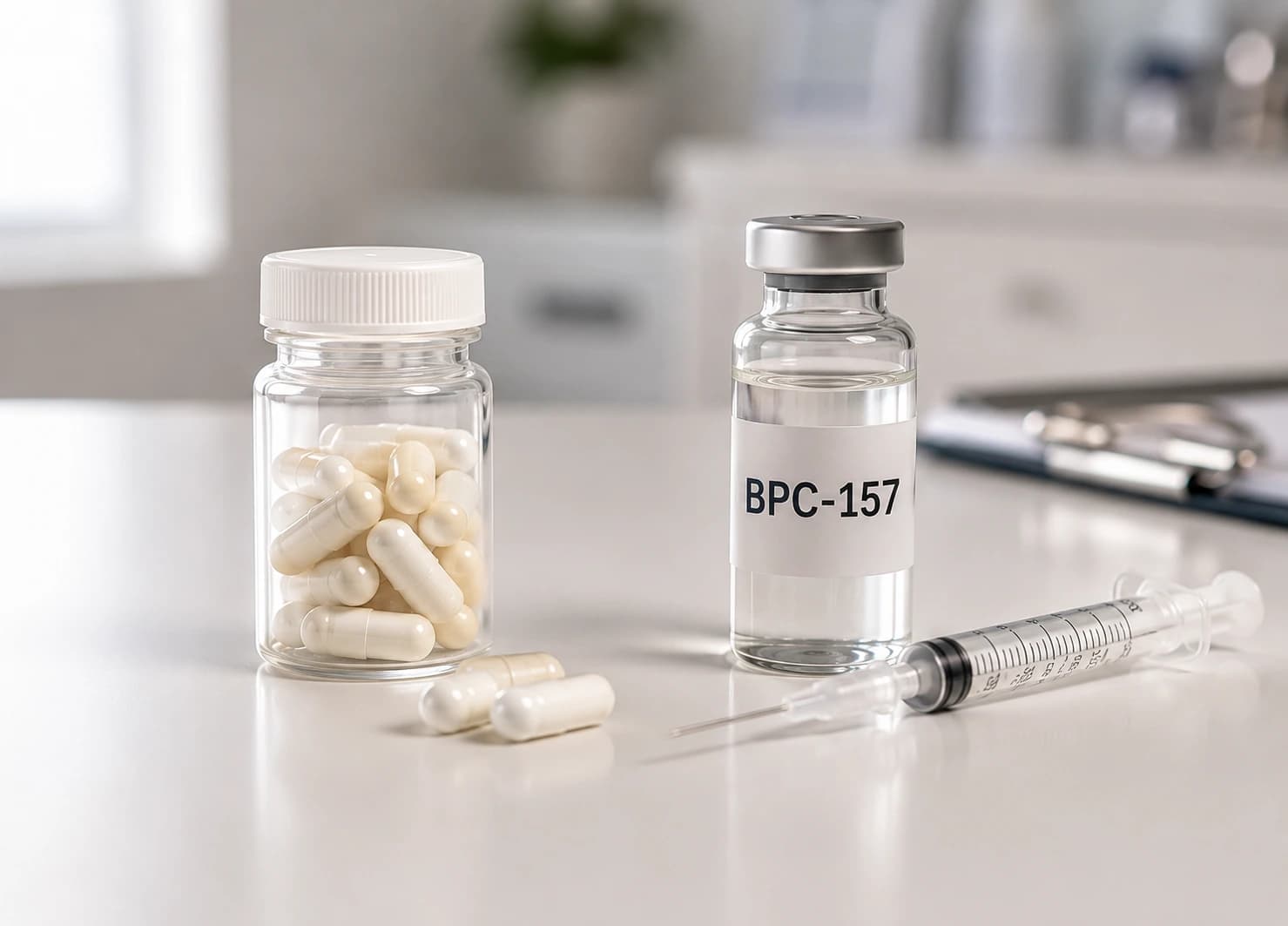
- Injection vials: usually sold as a lyophilized (freeze-dried) powder requiring reconstitution.
- Oral options: some vendors market oral BPC 157 forms (capsules, drops, or sublingual). These may involve different handling and absorption expectations.
- Combination packs: occasionally “stack” bundles that pair BPC 157 with other peptides.
Quality standards to look for (signals, not promises):
- Third-party COA: ideally linked to the exact lot/batch number.
- Clear labeling: batch number, stated concentration, and storage instructions.
- Transparent shipping: handling and storage guidance that shows they understand peptides are time/temperature sensitive.
- Consistent presentation: reasonable vial packaging, tamper evidence, and professional documentation.
Typical BPC 157 peptide injection “use language” you’ll see online: Many users follow vendor-written starting-dose instructions and adjust based on tolerability. Because products vary widely, it’s safer to treat “typical dose” as “typical user-reported practice,” not a universal standard. In my review, the most consistent pattern was shorter pilot blocks (often around 2 weeks) with tracking rather than blindly repeating a long regimen.
Important: I’m not telling you how much to inject. If a vendor provides dosing and you choose to follow it, do it precisely and only as written. If you have any medical oversight, use that support.
Comparison of Common Options
| Format | Typical Dose/Use | Pros | Cons | Cost | Best For |
|---|---|---|---|---|---|
| BPC 157 peptide injections (vial + reconstitution) | Lot-dependent; follow vendor protocol; users often start conservatively | Common in peptide communities; precise if instructions are followed | Sterile technique required; higher handling risk if products are poor quality | Often mid-range per cycle (varies by source and vial size) | People who can track effects and handle injections safely |
| BPC 157 oral capsules | Daily oral dosing per label; varies by product formulation | No needle; simpler routine | More variability in absorption; harder to separate “formula effect” from “peptide effect” | Often easier to compare; pricing varies widely by brand | Beginners who want lower process risk |
| BPC 157 sublingual/drops | Daily use per label; usually small measured servings | Needle-free; faster routine | Quality depends on ingredients and handling; also relies on absorption | Often mid-range | People who dislike injection logistics |
| “Stack” bundles marketed with BPC 157 peptide injections | Multiple peptides per regimen; follow bundle schedule | Convenient one-cart purchase | Harder to attribute effects; increases overall exposure to unknown variables | Often higher total price | Experienced users with solid vendor documentation |
| Third-party clinic/telehealth-provided products (where legal) | Prescribed/dispensed route; dosing varies | More regulated distribution in some areas; medical supervision may exist | Availability and compliance vary by location; cost can be higher | Often premium pricing | People who want an oversight pathway |
Buying Framework and Red Flags
To answer “where can I get BPC 157 peptide injections?” in a way that’s actually helpful, focus on a framework: choose the safest sourcing channel you can, then verify product quality signals, then plan a conservative test window with tracking.
Checklist before you buy BPC 157 peptide injections:
- Documentation: Do they provide a COA tied to the batch number you’re ordering?
- Transparency: Is the product description specific (vial size, concentration, storage, lot number)?
- Handling: Do they explain storage and shipping conditions for peptides?
- Consistency: Are images, labels, and documentation consistent across listings?
- Contact: Do they respond with clear answers instead of copy-paste sales lines?
- Pricing sanity: If it’s dramatically cheaper than comparable sellers, ask why. Huge discounts often correlate with missing documentation.
- Returns: Is there a real policy for damaged/incorrect items?
Red flags to treat as “no”:
- Overpromising outcomes (“guaranteed recovery,” “proven to cure,” “instant results”).
- No COA, a generic COA not tied to your lot, or documents that don’t match the product.
- Vague instructions, no reconstitution guidance, or no storage info.
- Claims that skip injection safety basics while encouraging frequent dosing.
- Sellers that push “stacking” without explaining monitoring and stopping criteria.
Common Mistakes and How to Avoid Them
Here are the mistakes I see most often when people try to figure out where to get BPC 157 peptide injections and how to use them:
- Starting too high: Many users jump straight to what someone else said online. A safer approach is to treat the first period as an experiment window and follow the provided protocol exactly.
- Skipping documentation: “It looks legit” is not the same as “it’s verified.” Lot-specific COA is a baseline.
- Changing multiple variables: If you alter workout load, sleep, and diet while beginning BPC 157 peptide injections, you won’t know what caused any change.
- No side-effect plan: Decide ahead of time what would make you stop (for example, persistent injection-site reactions, allergic-type symptoms, or worsening health markers).
- Ignoring sterility: Poor handling can be a bigger issue than the peptide itself. Use strict hygiene and do not improvise with unclear “shortcuts.”
FAQ
Is it proven that BPC 157 peptide injections work for recovery?
Human proof is limited. Most discussion is based on preclinical work and user reports. You may see anecdotes, but “proven” in the medical sense isn’t established.
How long does it take to notice any effects from BPC 157 peptide injections?
In user practice, people often look for changes over a couple of weeks rather than days. Responses vary, and some users notice nothing at all—tracking matters more than expectation.
What are common side effects of BPC 157 peptide injections?
Reported issues often include injection-site discomfort, fatigue, or other individual tolerability reactions. Any persistent or worsening symptoms should be treated as a stop-and-evaluate situation.
Can BPC 157 peptide injections be combined with other supplements or peptides?
Combination (“stacking”) is common in online communities, but mixing multiple exposures makes it harder to understand what’s causing effects or side effects. If you do combine, do so conservatively and avoid adding several new variables at once.
Is BPC 157 oral better than injection, or what’s the alternative to BPC 157 peptide injections?
Oral alternatives exist (capsules, sublingual, drops), but absorption and formulation differ. “Better” depends on your comfort with injection logistics versus the variability of oral products—quality signals still matter either way.
A Practical 2-Week Experiment Framework
If you decide to explore BPC 157 peptide injections, use a structured, consumer-safe framework that prioritizes tracking and stopping:
- Day 1 (setup): choose your source using the checklist, review dosing instructions exactly as provided, and plan your sterile prep routine.
- Days 1–3 (baseline): write down starting points: soreness score, sleep hours, training volume, and any existing digestive or comfort notes.
- Days 4–10 (monitor): track injection-site reactions daily and note any new symptoms. Keep diet and workout changes minimal.
- Days 11–14 (evaluate): compare to baseline. If you saw no change, that’s data. If you saw side effects, stop and don’t “push through.”
Stop criteria (simple): persistent worsening reactions, symptoms that feel allergic, or any health change you can’t rationally attribute to normal life. With BPC 157 peptide injections, your safest “win” is the ability to say, “I tried it carefully and I learned something.”
About the Author
Lena Hartwell is an independent consumer reviewer who writes practical, evidence-aware guides on peptide supply decisions and wellness product sourcing. She has spent years comparing ingredient labeling, documentation practices, and user-report patterns, focusing on what shoppers can verify (COAs, lot numbers, handling instructions) rather than what marketing claims. Her reviews emphasize cautious experimentation, side-effect awareness, and realistic expectations—especially for topics where preclinical discussion outpaces human clinical proof.
Disclaimer: This article is for informational purposes and reflects consumer-style observation, not medical advice. It does not recommend self-treatment or guarantee outcomes. If you’re considering BPC 157 peptide injections, consult a qualified healthcare professional and follow any applicable laws and product labeling instructions exactly.
Discussion